

A woman named Stella acquired her first Jellycat brand cuddly companion during a time of job loss during the global health crisis. Encouraged by an acquaintance's fondness for these UK-created creatures, her curiosity was truly captured upon seeing a distinctive gingerbread cottage design featured on a popular social networking app.
Although The Christmas holiday is not traditionally observed across China, acting more as a retail occasion rather than a religious festival, the concept of festive cottages appealed with her. "It doesn't mean a lot to me... However, I always like the appearance of those sweet houses," she states. This prompted her to eventually ask a friend from her hometown to buy the item on her behalf.
That purchase took place in 2021, right as the brand was poised to achieve enormous popularity in China and beyond. "People were anxious, and nobody knew what exactly would happen," recalls Stella, who developed a routine of petting and hugging her soft toys to cope during a difficult period. Residing in Beijing, which experienced among the strictest lockdowns in the world, she passed extended periods at home.
Now 32 with a new job in sales manager professional, Stella still grow her assortment. Her collection has reached approximately 120 items, with a total a cost of about 36,000 yuan. "At my age, you have numerous matters that you cannot share with other people... and the troubles we encounter are far more complex than before," she notes reflectively. "These soft toys assist me in managing my emotions."
Originally created with kids in mind, these squishy creatures have evolved into an international sensation, particularly in China where a somewhat disillusioned younger generation is seeking solace in them for comfort and solace.
Understanding the Adult Toy Enthusiasts
Stella's gingerbread cottage plushie is part of their "Amuseables" collection, a set of characters with tiny expressions inspired by everyday inanimate objects, from bathroom tissue and hard-boiled eggs. These items have become a key "standout products" which "appeal to a wide Gen-Z and millennial demographic" globally, as noted by market observers.
The surge in appeal "may have a connection to a desire to feel companiable," propose cultural commentators. It is difficult to say for sure if the introduction of the now-iconic series in 2018 was an intentional strategy to target the young adult market, companies in the sector are under pressure to need to find alternative audiences amid falling fertility rates in many countries.
Jellycat made its foray into the Chinese market back in 2015. By laying significant "groundwork", the toy maker was well-positioned to capture "the tone during Covid"—a time when individuals looked for comfort during heightened uncertainty—capitalizing on its early momentum there, according to business consultants.
Jellycat's popularity was further boosted by engaging pop-up experiences. These in-store events sometimes offered a menu of exclusive "food" themed items. Many enthusiasts record their experience interacting and share the videos on social platforms.
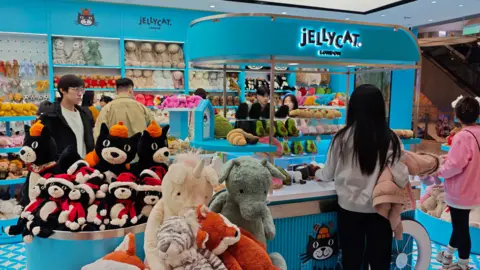
Adaptation to local tastes has also been an essential strategy. For instance, customers were able to buy stuffed toy interpretations of classic UK dishes such as fish and chips during a pop-up overseas. Conversely, items like teacup and teapot toys were sold at exclusive outlets in Chinese metropolises last year.
Last year, the British company's sales is said to have rose by two-thirds to reach an impressive figure. In that period, it sold an estimated $117 million in value of toys to Chinese consumers on leading online marketplaces, according to market intelligence data.
This growth reflects a wider surge within China's collectable-toy sector driven by adult consumers in search of emotional comfort and community. Total revenue of collectable toys nationally are projected to top 110 billion yuan annually, according to a 2024 industry report.
The runaway success of brands like Labubu, elf-like figures from domestic company Pop Mart, highlights the market's growing demand towards designer collectibles. This "kidult" phenomenon is not unique to China; young adults worldwide are increasingly question "traditional understandings of adulthood," observe cultural experts.

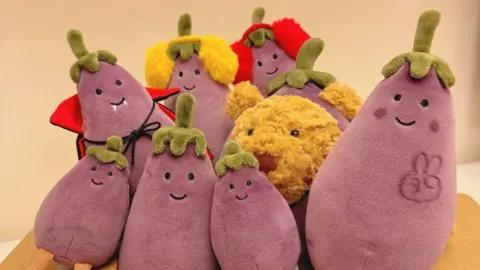
Particularly, items like the aubergine character—nicknamed "the boss" in China—have also spawned numerous online jokes, where users sharing frustrations about adult life. On social media, the "aubergine boss" hashtag serves as a platform where people sketch various emotive faces on the plushie, showing it in various moods enjoying a drink to forcing a smile.
For example, one Hong Kong-based, Wendy Hui, personalized her aubergine toy by drawing bags under its eyes and placing a pair of glasses on the toy. She posted a picture online captioning it: "The mood of employees at the start of the week." "I kept working from home even during time off," she explains. "I just wanted to convey the level of exhaustion I was."
Thus, Jellycat has become a surprising, light-hearted channel for young Chinese to air their grievances about a slowing economy, in which hard work doesn't always ensure commensurate rewards. Amid strict online censorship, digital spaces have become a crucial, if not the only, space for such conversations.
Its regular releases of exclusive products and the discontinuation of certain lines—an approach sometimes referred to as "scarcity marketing" locally—has also fueled {


